
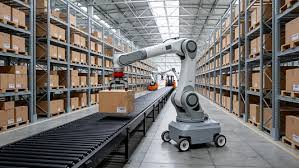
In today’s fast-paced business environment, efficiency and precision are the keys to success. For Hong Kong companies operating in logistics, retail, and e-commerce, adopting advanced technologies such as the ASRS system and AMR robots has become a necessity rather than a luxury.
Understanding the ASRS System
The ASRS system (Automated Storage and Retrieval System) is designed to optimize warehouse operations by automating the storage and retrieval of goods. Unlike traditional manual handling, the ASRS system uses computer-controlled equipment to move products seamlessly within a warehouse. This reduces human error, maximizes space utilization, and significantly improves speed. For Hong Kong enterprises dealing with limited land resources, the ASRS system provides vertical storage solutions that make every square meter count.
The Role of AMR Robots in Warehousing
AMR robots (Autonomous Mobile Robots) are another breakthrough in warehouse automation. Unlike fixed conveyor systems, AMR robots can navigate independently, adapting to dynamic environments. They are equipped with sensors and AI-driven navigation systems, allowing them to transport goods safely and efficiently. In Hong Kong’s dense urban logistics centers, AMR robots provide flexibility by moving across different warehouse zones, reducing congestion and enhancing productivity.
ASRS System and AMR Robots Working Together
The synergy between the ASRS system and AMR robots creates a fully integrated smart warehouse. The ASRS system manages the storage and retrieval of goods, while AMR robots handle the transportation and distribution within the facility. This collaboration ensures that products move seamlessly from storage to dispatch, minimizing delays and maximizing throughput. For Hong Kong businesses, this integration means faster order fulfillment and improved customer satisfaction.
Cost Efficiency and ROI
Investing in the ASRS system and AMR robots may seem costly at first, but the long-term benefits outweigh the initial expenses. The ASRS system reduces labor costs by automating repetitive tasks, while AMR robots lower the risk of workplace accidents and improve operational efficiency. Together, they deliver a strong return on investment by increasing productivity, reducing errors, and ensuring consistent performance.
Case Studies in Hong Kong
Several Hong Kong logistics companies have already adopted the ASRS system and AMR robots. One leading e-commerce warehouse reported a 40% increase in order processing speed after implementing the ASRS system, while AMR robots reduced manual handling time by 30%. These results highlight how combining both technologies can revolutionize warehouse operations in a competitive market.
Future Prospects of ASRS System and AMR Robots
The future of warehousing lies in further integration of AI and machine learning with the ASRS system and AMR robots. Predictive analytics will allow warehouses to anticipate demand, while advanced robotics will enhance precision and adaptability. For Hong Kong, where space and efficiency are critical, these technologies will continue to play a pivotal role in shaping the logistics industry.
In conclusion, the ASRS system and AMR robots represent the future of warehousing and logistics in Hong Kong. By embracing these innovations, businesses can achieve higher efficiency, lower costs, and greater customer satisfaction. The combination of ASRS system and AMR robots is not just a technological upgrade—it is a strategic move towards sustainable growth in a competitive global market.